
Top 3 Most Common Golf Injuries: How to Spot Them and Recover Stronger

Whether you are hitting the driving range after work or playing 18 holes on the weekend, golf places unique, repetitive demands on the human body. Strength and conditioning research from the UK Strength and Conditioning Association (UKSCA) emphasizes that a full-velocity golf swing produces high rotational speeds, asymmetric loading, and ground reaction forces up to double a player's body weight.
According to sports medicine literature published in the Journal of Orthopaedic & Sports Physical Therapy (JOSPT) and the British Journal of Sports Medicine (BJSM), up to 60% of recreational golfers and 85% of professionals experience a golf-related injury during their playing career.
At Ion Performance and Wellness, we frequently see golfers sidelined by preventable overuse injuries. Here is a breakdown of the top 3 most common golf injuries, how to spot them, and evidence-based strategies from UKSCA, JOSPT, and BJSM to rehab them and keep you on the fairways.
1. Low Back Pain (Lumbar Spine Strain & Disc Irritation)
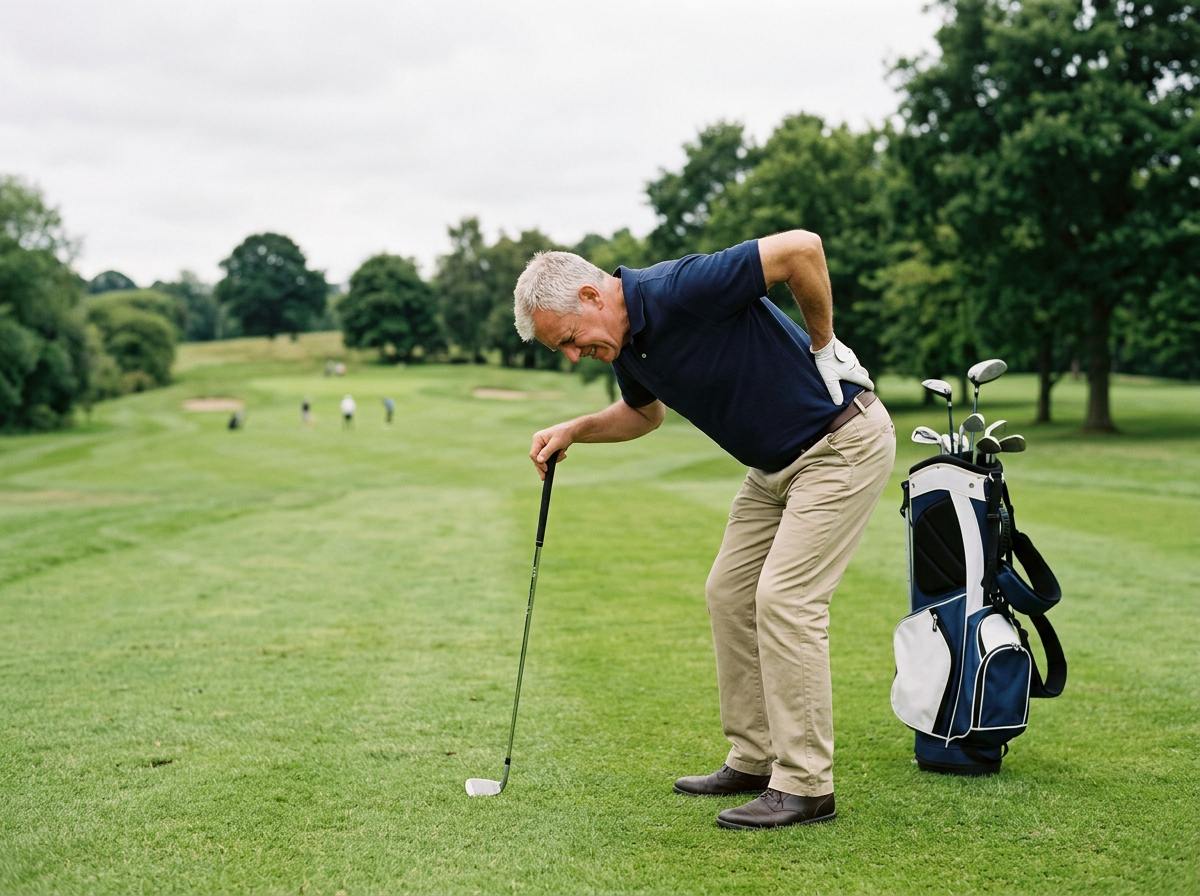
Low back pain accounts for 18% to 35% of all golf injuries, making it the single most common musculoskeletal complaint among golfers of all skill levels.
Why It Happens
The modern golf swing creates high peak shear, compressive, and rotational forces through the lumbar spine. Clinical research highlights that if a golfer lacks rotational mobility in the thoracic spine (mid-back) or hips, the lower back compensates by over-rotating and side-bending under massive load (the "Crunch Factor" documented in BJSM).
How to Identify It
A dull, aching sensation across the lumbar region or localized tightness near the beltline during or after a round.
Sharp pain at the top of the backswing or during the violent transition into the downswing.
Stiffness or pain when bending forward, extending backward, or twisting off the course.
Rehab & Prevention Strategies (JOSPT & UKSCA Guidelines)
Restore Thoracic & Hip Rotation: Improving thoracic spine extension/rotation and hip internal rotation removes compensatory stress from the lumbar spine. Perform Open Book stretches and 90/90 Hip Rotations.
Build Anti-Rotational Core & Glute Capacity: Following strength & conditioning frameworks from the UKSCA, focus on building robust physical capacity through multi-planar trunk exercises (Pallof presses, heavy deadbugs) and gluteal force production to anchor the pelvis through impact.
Warm-Up Protocol: BJSM and UKSCA studies show that a 10-minute dynamic warm-up (hip hinges, torso rotations, lunges with a twist) significantly reduces lumbar strain and improves clubhead speed compared to static stretching or jumping straight to the driver.
2. Golfer’s & Tennis Elbow (Medial & Lateral Epicondylitis)
Elbow tendinopathy ranks as the second most frequent injury in amateur golfers, affecting both the lead elbow (typically lateral epicondylitis/Tennis Elbow) and the trail elbow (medial epicondylitis/Golfer's Elbow).
Why It Happens
Repeated impact with the turf (striking "fat" or deep divots), sudden spikes in range volume, and improper grip pressure cause micro-tears in the forearm flexor and extensor tendon attachments. Over-releasing the wrist angle prematurely or pulling through impact with excessive hand tension places excessive strain directly on these forearm tendons.
How to Identify It
Localized tenderness along the inner bump (medial epicondyle) or outer bump (lateral epicondyle) of the elbow.
Grip weakness or sharp pain when shaking hands, opening jar lids, or holding a golf club at address.
Discomfort radiating down the forearm during impact or follow-through.
Rehab & Prevention Strategies (BJSM, UKSCA & JOSPT Guidelines)
Progressive Heavy Slow Resistance (HSR): Systematic reviews in BJSM and UKSCA tendinopathy protocols emphasize heavy, slow eccentric and concentric loading as the gold standard for restoring tendon stiffness. Perform wrist flexor/extensor curls (3 x 10-12 reps with a 3-second eccentric phase) using dumbbells or flex bars.
Grip Pressure Audit: Excessive tension in the hands overloads forearm musculature throughout the swing. Maintain a grip pressure of about 4 or 5 out of 10.
Scapular & Shoulder Conditioning: Strengthen the posterior shoulder and scapular retractors (Y-T-W drills, face pulls) to ensure power generation originates from the larger trunk muscles rather than the small muscles of the arm.
3. Lead Hip Impingement & Rotator Cuff Tendinopathy
Because the golf swing requires explosive lead-hip internal rotation and high-velocity shoulder deceleration, the lead hip (left hip for a right-handed golfer) and lead shoulder bear immense rotational loads.

Why It Happens
During the downswing, the lead hip must rapidly absorb body weight while rotating internally. If the joint capsule lacks internal rotation, repetitive rotation causes Femoroacetabular Impingement (FAI) or labral irritation. Concurrently, JOSPT and UKSCA research shows that the posterior rotator cuff muscles in the lead shoulder work at near-maximal eccentric capacity to decelerate the clubhead post-impact, leading to subacromial impingement or strain.
How to Identify It
Deep groin, anterior thigh, or lateral hip pinching during the follow-through phase.
Aching at the front or top of the lead shoulder when reaching peak backswing or cross-body lead arm elevation.
Reduced rotational flexibility in the lead leg when attempting to turn through the ball.
Rehab & Prevention Strategies (UKSCA & JOSPT Guidelines)
Lead Hip Internal Rotation Mobilizations: Perform half-kneeling hip mobilizations and dynamic seated hip internal rotation drills to optimize joint capacity.
Eccentric Shoulder Deceleration Training: Strengthen the shoulder external rotators (posterior cuff) using eccentric cable/band reverse flies, side-lying external rotations, and high-speed braking drills.
Flare the Lead Foot: A simple swing adjustment is flaring the lead foot outward by 15 - 20 degrees at setup. This instantly reduces internal rotational demands on the lead hip joint by up to 30%.
Play Pain-Free with Evidence-Based Care
Golf injuries rarely resolve with passive rest alone—they require targeted physical screens, mobility restoration, and progressive force-absorption training to handle the physical demands of the swing. Below is a list of sample exercises that could help address some golf injuries. However, it is always better to get assessed to understand your specific needs and develop a tailored rehab program.
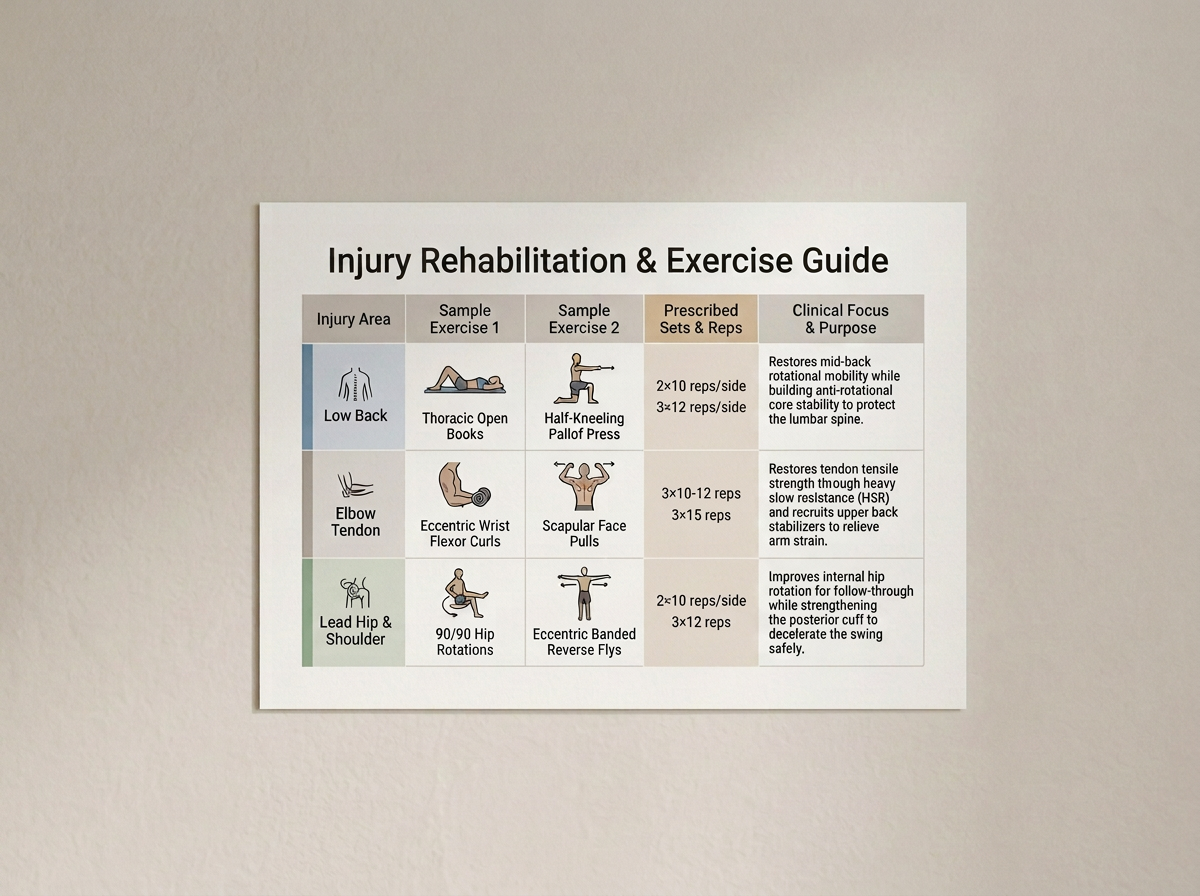
Sample exercises for golf injuries
At Ion Performance and Wellness, our physical therapists utilize current golf research, athletic development concepts and evidence-based TPI, JOSPT/BJSM protocols to fix the root cause of your pain and optimize your performance.
👉 Book your Golf Injury Assessment with Ion Performance and Wellness today and play your best golf all season long!