
Thoracic Outlet Syndrome (TOS): Symptoms, Types & Physiotherapy Treatment
Have you ever experienced unexplained numbness, tingling, or heaviness radiating down your arm after working at a desk or reaching overhead? If neck or shoulder treatments haven't helped, Thoracic Outlet Syndrome (TOS) might be the root cause.
At Ion Performance & Wellness in Burnaby, we treat clients experiencing upper extremity nerve and vascular symptoms caused by thoracic outlet compression. Here is an evidence-based overview of TOS symptoms, diagnostic criteria, and how physiotherapy can provide lasting relief.
What is Thoracic Outlet Syndrome?
Thoracic Outlet Syndrome occurs when the brachial plexus (nerve network) or subclavian blood vessels become compressed as they pass from the neck to the armpit through three key anatomical spaces:
Interscalene Triangle (between the scalene muscles and first rib)
Costoclavicular Space (between the collarbone and first rib)
Retropectoral Space (under the pectoralis minor muscle)
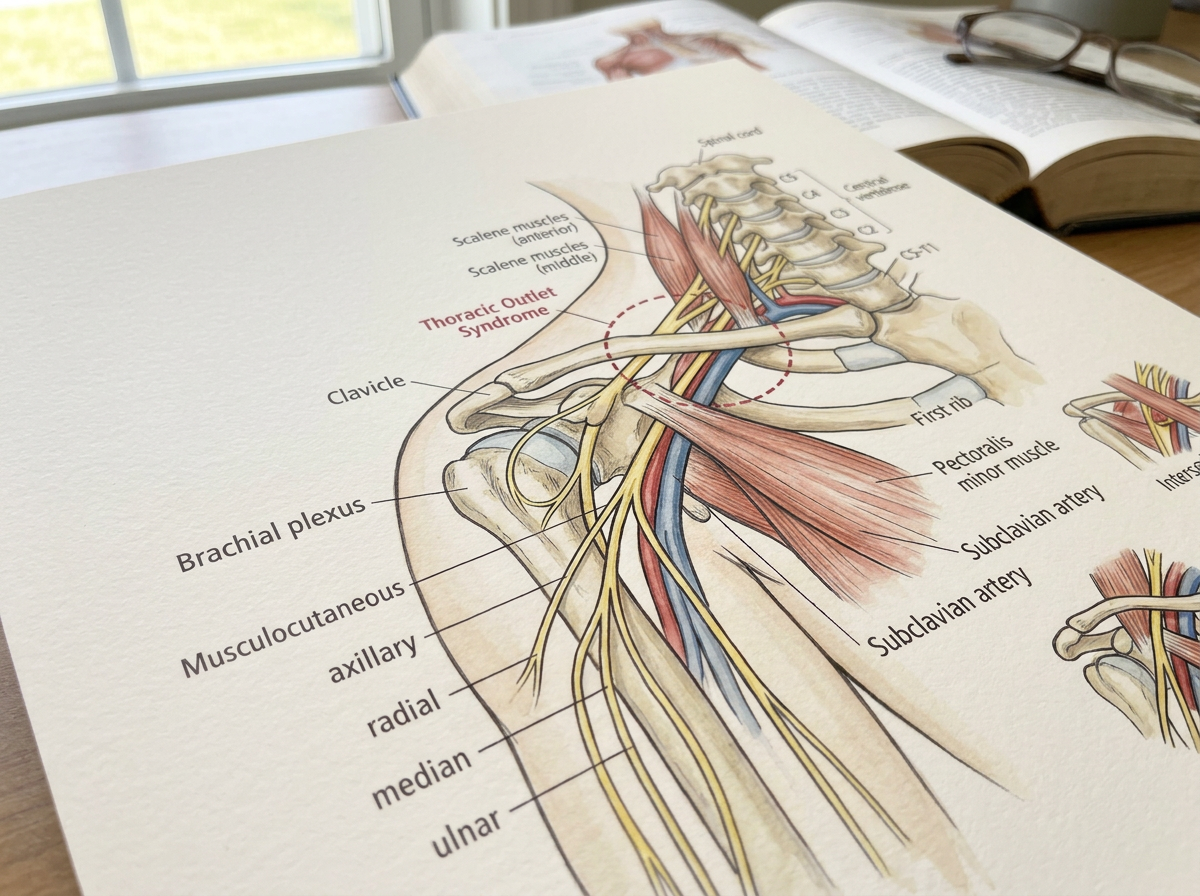
Brachial Plexus Anatomy and where TOS could occur
The 3 Types of Thoracic Outlet Syndrome
TOS is classified into three distinct types:
Neurogenic TOS (nTOS): Accounts for 90% to 95% of all cases. Caused by brachial plexus compression, resulting in arm pain, numbness, and tingling along the inner forearm and pinky finger.
Venous TOS (vTOS): Accounts for 3% to 5% of cases. Caused by subclavian vein compression, leading to arm swelling, heaviness, and visible chest vein dilation.
Arterial TOS (aTOS): Rare (<1% of cases). Caused by subclavian artery compression, causing cold fingers, skin paleness, weak radial pulse, and arm fatigue.
Key Symptoms of TOS
Numbness or tingling in the 4th and 5th fingers (ring and pinky)
Deep, aching pain in the neck, shoulder, arm, or hand
Worsened symptoms with overhead activities or prolonged sitting
Reduced grip strength or hand muscle weakness
Cold sensation, discoloration, or swelling in the hand/arm
How Physiotherapists Assess TOS
Because TOS symptoms mimic cervical radiculopathy and carpal tunnel syndrome, an accurate clinical assessment requires a combination of diagnostic criteria:
Subjective History: Screening for posture patterns, overhead sport demands, and positional triggers.
Special Clinical Test Clusters: Combining tests like the Roos Test (EAST), Adson’s Test, Wright’s Test, and Upper Limb Tension Tests (ULTT) to assess neurovascular compromise.
Movement & Palpation Screening: Checking for first-rib hypomobility, upper thoracic stiffness, and myofascial tightness in the scalene and pectoralis minor muscles.
Evidence-Based Physiotherapy Treatments for TOS
Clinical studies on PubMed and CINAHL support conservative physical therapy as the primary treatment for Neurogenic TOS:
Manual Therapy: Gentle first-rib mobilizations, thoracic spine manipulations, and soft tissue release targeting hypertonic scalene and chest muscles.
Scapular & Postural Retraining: Strengthening the serratus anterior, lower trapezius, and deep neck flexors to open up compressed anatomical spaces.
Neurodynamic Mobilizations: Safe nerve-gliding exercises designed to improve brachial plexus mobility without aggravating nerve tissues.
Ergonomic & Activity Modifications: Desk setup adjustments, posture strategies, and training modifications to keep pressure off the thoracic outlet.
Get Relief from TOS at Ion Performance & Wellness
If persistent arm pain, numbness, or weakness is interfering with your daily life or training, early clinical intervention is key to full recovery.
Book Your Assessment Online with our Burnaby physiotherapy team at Ion Performance & Wellness today!