
Hamstring Strain Injuries: What Runners Need to Know
Welcome to the Ion Performance and Wellness running injuries series! Today we are tackling one of the most frustrating speed bumps in a runner’s training calendar — the hamstring strain.
Whether you felt that sudden mid-sprint "grab" at the back of your thigh or watched a running buddy pull up limp during a interval workout, this guide breaks down everything you need to know: how hamstring strains happen, realistic recovery timelines, modern evidence-based rehab protocols, and how to return to the road or track stronger than before.
Anatomy: What Are We Actually Dealing With?
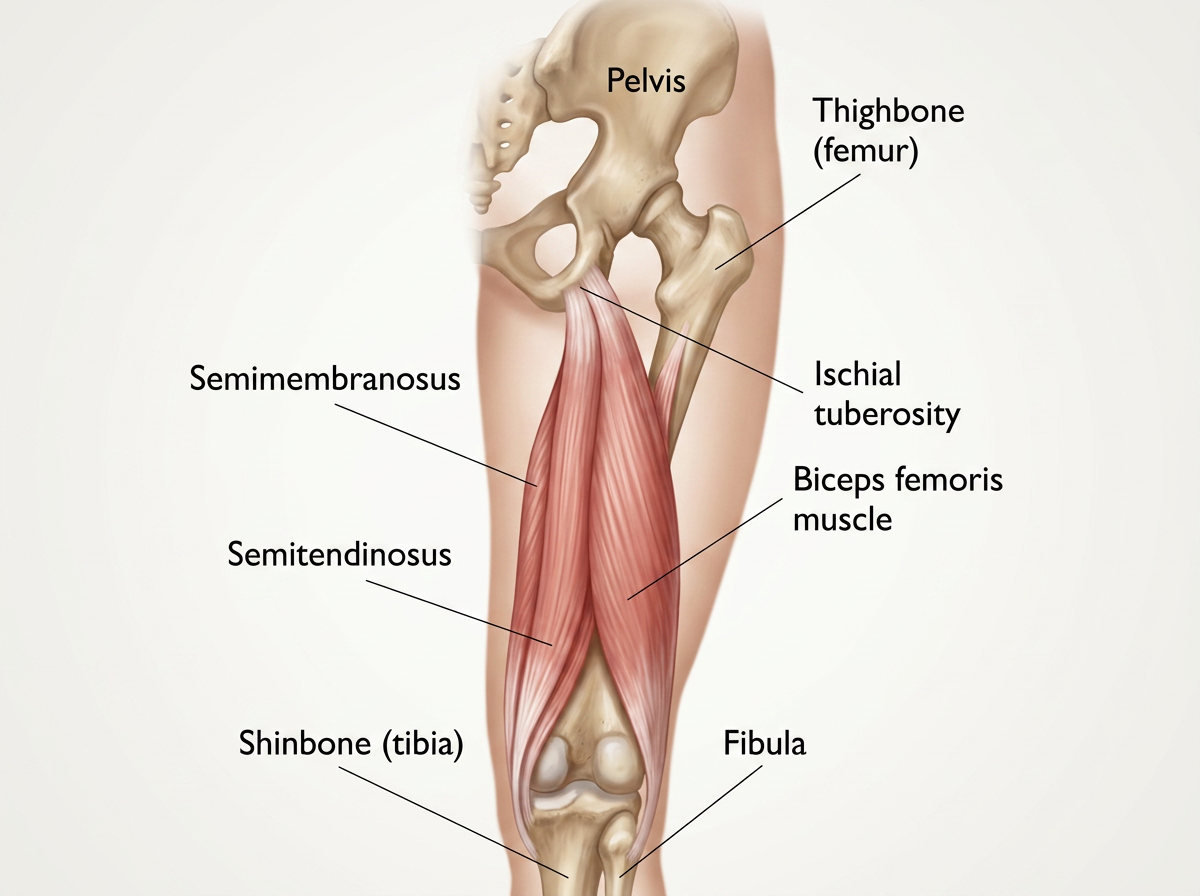
The "hamstring" isn't just one muscle — it is a group of three distinct muscles located along the posterior thigh. Understanding which muscle is involved helps explain why some strains resolve in a few weeks while others take months of structured loading.
Biceps Femoris (Outer Thigh): The primary workhorse during high-speed running. It absorbs massive eccentric force when decelerating your swinging leg right before foot strike, making it responsible for over 80% of all running-related hamstring strains.
Semitendinosus (Inner Thigh): Works alongside deeper hamstring tissue to assist with knee flexion and hip extension. Strained less frequently in sprinting, but often involved in over-stretch mechanisms (e.g., hurdles or extreme stride extension).
Semimembranosus (Inner/Deep Thigh): A broad, flat muscle assisting in both knee flexion and hip extension. Because it sits deeper in the thigh, injuries here can be harder to localize and often benefit from a thorough clinical evaluation or imaging.
Injury Grades, Timelines & Risk Factors
Modern Grading & Recovery Times
Traditional grading system categorizes injuries by mild, moderate, or severe tearing. Modern consensus published in the British Journal of Sports Medicine (BJSM) and Journal of Orthopaedic & Sports Physical Therapy (JOSPT) emphasizes tissue involvement — specifically whether the strain involves pure muscle belly or extends into tendon structures (such as the intramuscular tendon or proximal insertion near the ischial tuberosity). Tendon involvement significantly increases recovery timelines.
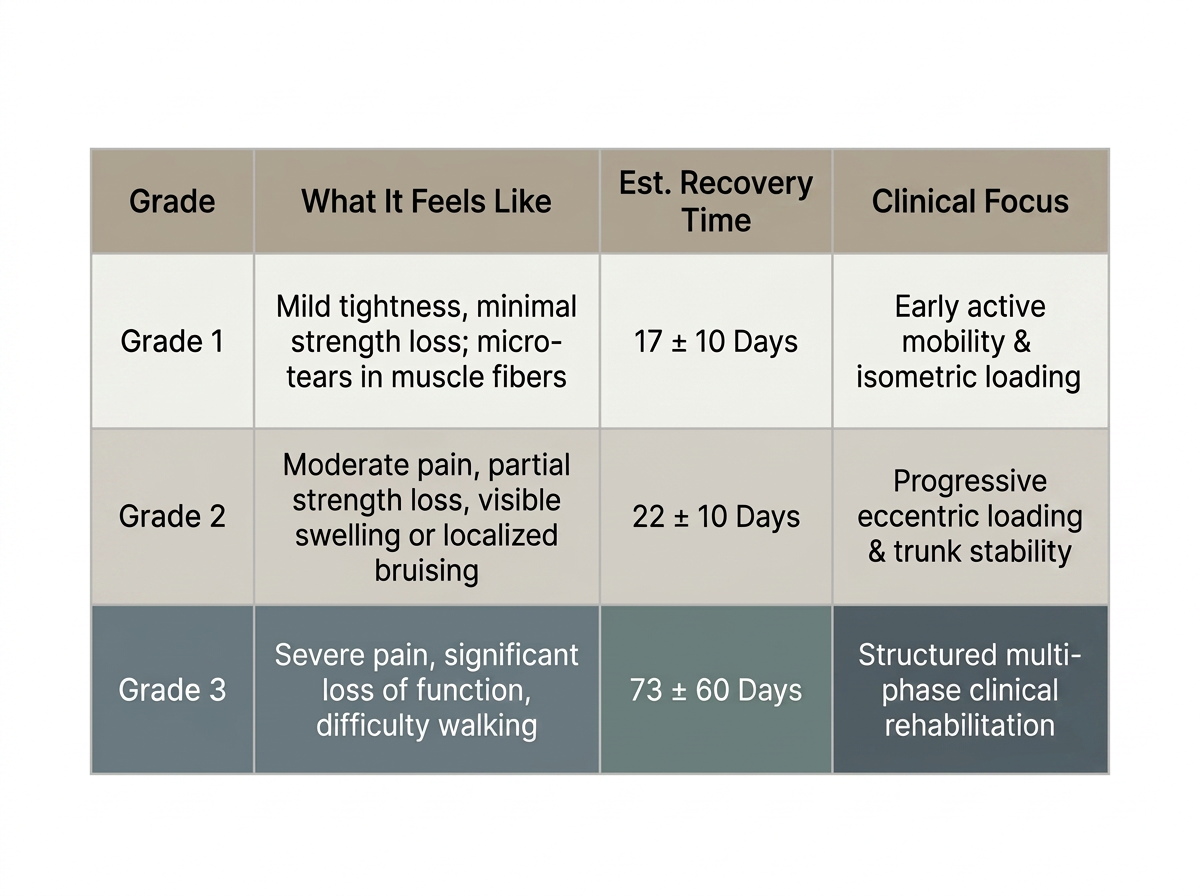
Clinical Note: Strains located near the ischial tuberosity (sitting bone) involve tendon tissue with lower vascularity. These proximal hamstring tendinopathies or tears require patient, load-managed rehab strategies.
Key Risk Factors: What Increases Your Odds?
Recent sports medicine research from JOSPT highlights both controllable and uncontrollable risk factors for runners:
Prior Hamstring Strain (Risk multiplier: ~3.6x): The single strongest predictor of a new injury is a previous strain. Premature return to sport or incomplete eccentric strength rehab leaves the muscle vulnerable at lengthened positions.
Age & Tissue Compliance: As runners age, collagen compliance naturally changes, increasing susceptibility to strain under explosive loads.
Sprint & Speed Volume Spikes: Rapidly spiking high-speed running or interval volume without sufficient progression dramatically increases risk.
Quad-to-Hamstring Imbalance: If your quadriceps generate massive concentric force without equal eccentric counter-balance from the hamstrings, the posterior thigh gets overstretched during terminal swing.
Modern Rehab: Moving Beyond "RICE"
The classic approach of prolonged bed rest, ice, and passive stretching is outdated. Current BJSM guidelines endorse the PEACE & LOVE framework (Protect, Elevate, Avoid anti-inflammatories, Compress, Educate & Load, Optimism, Vascularisation, Exercise), prioritizing early progressive loading.
Core Principles of Hamstring Recovery
Start Early with Isometrics (24–48 Hours): Gentle static muscle activation within 24 to 48 hours reduces acute pain, maintains neuromuscular connectivity, and prevents tissue atrophy.
Embrace Eccentric Training: Strengthening the hamstring as it lengthens (e.g., Nordic Hamstring Curls, Romanian Deadlifts) is the evidence-based gold standard for restoring fascicle length and building tissue load capacity.
Train at Lengthened Positions: High-speed running demands strength when the hip is flexed and knee is extended. Restricting strength training to short-range knee curls leaves a dangerous weakness during sprinting.
Follow the Pain Rule: During rehabilitation exercises, mild discomfort (up to 2–3 out of 10 on a pain scale) is acceptable—provided pain returns to baseline within 24 hours. However, high-speed running must remain completely pain-free.
Early Phase Rehab Exercises (Weeks 1–2)
Below is a foundational starting protocol targeting early activation, pelvic stability, and low-load eccentric tolerance:
Isometric Heel Digs(2 sets × 6 reps) — Static, low-load contraction to safely activate the hamstring in early recovery.
Kickstand RDLs(2 sets × 6 reps) — Controlled eccentric loading through a comfortable range of motion.
Divers(2 sets × 8 reps) — Integrates trunk control, single-leg balance, and posterior chain engagement.
90/90 Hamstring Bridge(3 sets × 8 reps) — Mid-range co-contraction exercise building foundational endurance with minimal shear stress.
Return-to-Sport Checklist
To safely transition from rehabilitation back to high-intensity running without risking a secondary tear, ensure you meet all three criteria:
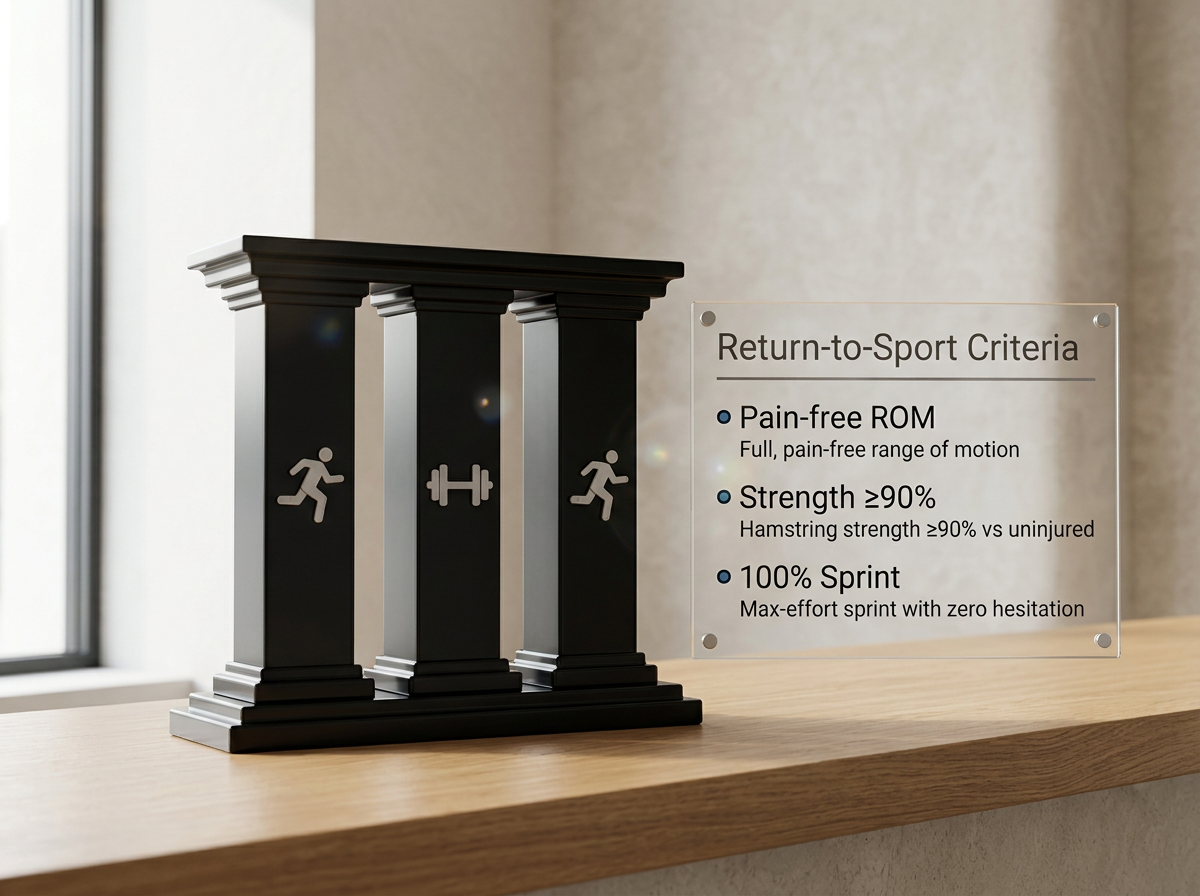
Pain-Free Range of Motion: Full active and passive flexibility matching the uninjured leg.
Strength Symmetry (90%): Peak force and lengthened eccentric strength within 10% of the uninjured limb.
Max-Effort Acceleration & Sprinting: Full-speed sprinting without pain, hesitation, or guarding.
Ready to Recover Smarter?
Recovering from a hamstring injury requires more than waiting for pain to fade—it requires a tailored, load-managed progression to rebuild strength and speed safely.
At Ion Performance and Wellness, our team of physiotherapists, kinesiologists, and sports performance specialists in Burnaby, BC work with runners to diagnose root causes, optimize biomechanics, and build individualized return-to-running plans.
👉 Book your assessment with Ion Performance and Wellness today and take the first step toward pain-free running!